When “safe passage” becomes a price, not a principle
For decades, the Strait of Hormuz was treated as an assumption built into global commerce. Narrow, tense, politically charged—yes. But fundamentally open. Roughly one‑fifth of the world’s oil, large volumes of LNG, fertilizers, and bulk commodities moved through it. International maritime law said they could. Freedom of navigation was not a service. It was the baseline.
That assumption has now collapsed.
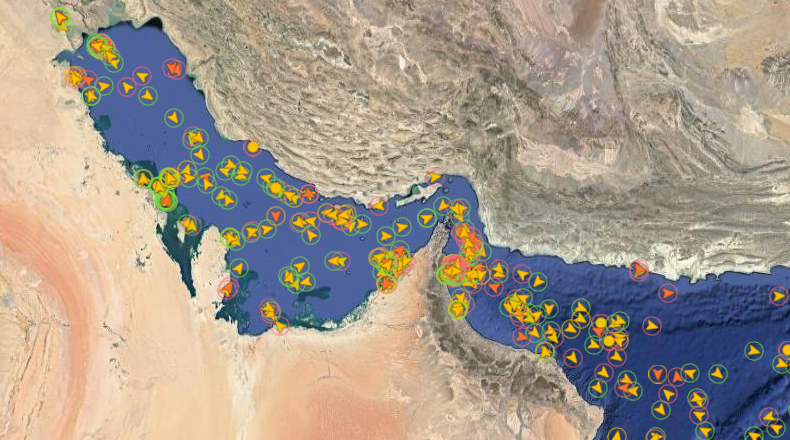
In early 2026, amid the escalating U.S.–Iran conflict, multiple mainstream outlets reported that commercial vessels transiting the Strait of Hormuz were being asked—selectively and informally—to pay substantial “safe‑passage” fees. In some cases these fees reportedly reach millions of dollars per voyage. This has been described by analysts as Iran erecting a de‑facto “toll booth” in one of the world’s most critical shipping lanes (NBC News Tehran Tollbooth, Deutsche Welle).
Iranian officials have denied the existence of a formal toll regime. Yet Iranian lawmakers and state‑aligned media have framed the practice as part of a “new sovereign regime” governing the strait during wartime. Shipping intelligence sources report that at least some vessels are believed to have complied (DW, CNBC).
Whether codified in law or improvised in practice, the effect is unmistakable:
The Strait of Hormuz is being transformed from an international waterway into a toll highway—but not the kind the world is familiar with. These are not transparent tolls levied to finance the construction, maintenance, or operation of shared infrastructure. They do not pay for dredging, traffic management, safety systems, or governance. Instead, they function as protection payments. Money extracted under implicit threat, untethered from any service rendered, and justified only by the ability to impose harm. What is being sold is not passage, but restraint.
Protection Payments, Not Transit Fees
Shipping has always involved fees. Canal tolls, port dues, pilotage charges, tug services—these are transparent, published, and tied to real infrastructure or services rendered. The Panama Canal Authority publishes its tolls openly, with pricing based on vessel size, cargo, and lock usage (Panama Canal Authority). Port authorities charge for berths, dredging, pilots, and terminal handling—fees that fund assets enabling trade.
Globally, hundreds of billions of dollars are being invested in ports, canals, and maritime infrastructure to reduce friction in global trade and improve resilience (Fortune Business Insights). These investments aim to improve reliability, lower costs, and support long‑term growth.
The “toll highway” emerging in the Strait of Hormuz does the opposite , with the reported “safe‑passage” payments categorically different from the above noted investments in maritime infrastructure.
They are:
- Opaque, not published
- Selective, not universal
- Enforced by threat, not contract
- Unrelated to infrastructure provision
In every material respect, these payments fail the test of legitimate tolling. In commercial terms, these payments resemble protection money, not tolls. Furthermore, this model for global trade replaces predictability with discretion. Law with leverage. Engineering with intimidation. Does anyone recognize the parallels here with recent trends in the domestic and foreign policy of another well known nation?
A Very Old Model, Revived at Sea
Historically, piracy was not always about robbery. Often, it was about payment in exchange for restraint. From the Barbary Coast to the Horn of Africa, merchants and states paid ransoms, tributes, or informal fees to ensure ships were not seized, burned, or sunk. Modern maritime law attempted to extinguish this logic by treating pirates as hostis humani generis—enemies of all mankind (UNCTAD piracy overview).
What we are seeing in the Strait of Hormuz is uncomfortably close to that lineage.
The enforcement mechanism is no longer a skiff with ladders. It is drones, missiles, mines, and selective vetting.
The principle, however, is unchanged:
Pay, and nothing happens. Refuse, and something might.
This model is not unfamiliar to anyone who has lived or worked in environments where informal coercion substitutes for formal security.
In many countries where I have worked, “car attendants” would offer to watch your vehicle for a small fee. Everyone understood the unspoken rule. Pay a small fee, and your car would likely remain untouched. Decline, and the probability of damage increased dramatically. The service was not security—it was the monetisation of risk created by the very people offering protection.
The Strait of Hormuz increasingly operates on the same logic, but scaled to global trade.
Ships deemed “non‑hostile” may be waved through after vetting. Others face delays, diversions, or worse. In some cases, governments—not shipowners—are now negotiating directly with Tehran to secure passage for national fleets. If true, this reinforces the idea that safe transit is becoming a negotiated privilege rather than a universal right (Lloyd’s List‑cited reporting via The Independent).
Insurance Can Price Risk — But It Cannot Legitimize Extortion
Institutions such as Lloyd’s of London exist to quantify risk and assign premiums. Since the conflict escalated, war‑risk insurance premiums for Hormuz transits have surged dramatically, in some cases rising several hundred percent over pre‑war levels (Euronews, The Guardian).
This is painful but conceptually sound: higher danger, higher premium.
A safe‑passage payment is something else entirely.
Insurance compensates after loss. A protection payment is designed to prevent loss by pro-actively paying the potential aggressor directly. If such payments become routine, they risk being absorbed into freight rates as just another cost of doing business—a de‑facto tariff imposed by force rather than law.
At that point, the question becomes unavoidable:
When does “safe passage” become a permanent line item in the cost of shipping?
Mercantilism, Reintroduced by Missile
This moment fits squarely into a mercantilist worldview that has gained traction under the Trump presidency.( Trump and Mercantilism in the 20th Century )
Mercantilism treats trade routes not as a “global good” but as strategic assets to be controlled, taxed, and – when useful -weaponised. Choke-points are not shared goods; they are revenue opportunities. As The Economist has recently argued, the breakdown of freedom of navigation is forcing shipping firms and insurers to accept a more fragmented, politically priced maritime order (The Economist).
The U.S. engagement with Iran has triggered Iran to monetize their control over a maritime choke-point.
Hormuz Will Not Be the Last Test Case
The Strait of Hormuz is uniquely important, but it is not unique in principle.
Other vulnerable choke-points include:
- The Bab el‑Mandeb, already destabilized by militia attacks and surging insurance costs
- The Strait of Malacca, vital to Asia–Europe trade
- The Bosphorus and Dardanelles, governed by treaty but exposed to geopolitical leverage
- The South China Sea, where legal rulings have already proven unenforceable
If Hormuz demonstrates that selective coercion can be converted into revenue, it is difficult to argue others will not follow. The model replaces predictability with discretion. Law with leverage. Engineering with intimidation. This is not infrastructure that facilitates trade—it is a form of trade infrastructure that extracts rent from fear.
Conclusion
If the Strait of Hormuz becomes normalized as a place where ships pay to avoid being attacked, we will have crossed a fundamental line—from insuring against risk to paying those who create it.
History offers little comfort about where that road leads. Piracy, once tolerated as a cost of commerce, ultimately made trade more expensive, more violent, and less reliable. The modern maritime system was built to escape that trap.
Turning Hormuz into the world’s newest toll highway risks dragging us straight back into it.
 PGTS Inc.