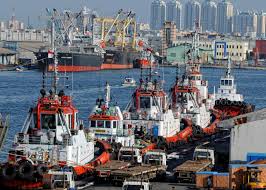
Trade barriers, which range from trade sanctions and import tariffs to non-tariff barriers (NTBs) such as labeling, documentation, complex or discriminatory rules of origin, and quotas, are often deployed by policymakers in an effort to protect domestic industries from foreign competition. As geopolitical conflicts increasingly influence trade policies, these barriers have become tools for nationalist governments worldwide.
However, it is unclear if these policies are achieving their intended effects. Several examples from recent American trade policy illustrate how innovations in business models and product development, spurred by these barriers, may actually be strengthening the companies subjected to these measures.
Japanese Automakers and Vehicle Quotas
A historical example is the imposition of quotas on vehicles imported from Asia by the United States. Intended to limit the number of inexpensive Japanese vehicles in the North American market and protect domestic automakers like Ford, GM, and Chrysler, Japanese automakers responded by focusing on exporting higher-end luxury models to North America.
This strategy not only allowed them to compete successfully in the sheltered market but also led to a perception among consumers that Japanese imports were of higher quality and better value. Consequently, Japanese automakers increased their profit margins by exporting high-margin luxury models, thereby circumventing the intended protective measures.
Chinese Companies and Tariffs
More recently, in 2018-2019, the U.S. Congress raised tariffs on a wide range of products imported from China. This prompted Chinese companies such as SHEIN and TEMU to innovate their business models to avoid the higher tariffs.
They exploited the de minimis exemption ( Section 321, 19 USC 1321) which allows packages valued below $800 to enter the United States duty-free. U.S. Customs and Border Protection has forecast that with the growth in online shopping, the volume of de minimis shipments entering the United States grew from roughly 500 million in 2019 to nearly 1.4 billion packages in 2024. Roughly seventy percent of these packages came from China, with nearly 30% originating from online retailers like SHEIN and TEMU.
The unintended consequence of these tariffs was to create an incentive for companies to innovate their distribution models, routing through warehouses south of the American border where shipments could be broken down to meet de minimis requirements.
A recent working paper suggests the response to these tariffs – through actions such as exploiting the de minimis exemption – has likely saved American consumers $22 billion a year. However, it has also placed American retailers, who import in bulk and therefore are obliged to incorporate the direct and indirect cost of the tariff in their pricing, at a competitive disadvantage.
Huawei and Technological Innovation
The conflict between the U.S. Congress and Huawei illustrates another unintended impact of trade barriers and sanctions. Designed to stymie Huawei’s growth in the technology sector, the sanctions led the company to invest heavily in developing its own components and technologies.
Huawei has diversified into televisions, watches, and systems for the electric vehicle market, replacing over 13,000 foreign-made parts with domestically produced alternatives. As a result, 60-70% of the components in a typical Huawei smartphone are sourced locally, compared to 30-40% for an Apple iPhone. Indeed, the bulk of the international components in an Apple iPhone continue to be sourced from China.
Huawei’s focus on developing local technology has also led to significant investments in silicon carbide (SiC) wafers, which are essential for high-performance semiconductor applications in various industries, including EVs, renewable energy, telecommunications, defense, and consumer electronics. Huawei’s involvement has contributed to reshaping the SiC supply chain and reducing global prices, benefiting consumers across these sectors.
Conclusion
The rationale for trade barriers typically blends domestic politics, competitive pressures, and geopolitical posturing. However, the innovative responses by firms to these measures demonstrate that competition often drives companies forward in unexpected ways. Government measures intended to increase the cost of trade frequently create unintended incentives for companies to innovate and adapt, sometimes strengthening their market positions despite the barriers.
This phenomenon underscores the complex dynamics of global trade and the resilience of businesses in the face of protectionist policies. The real question may not be whether trade barriers are good or bad for business, but how businesses can best navigate and respond to these challenges.

