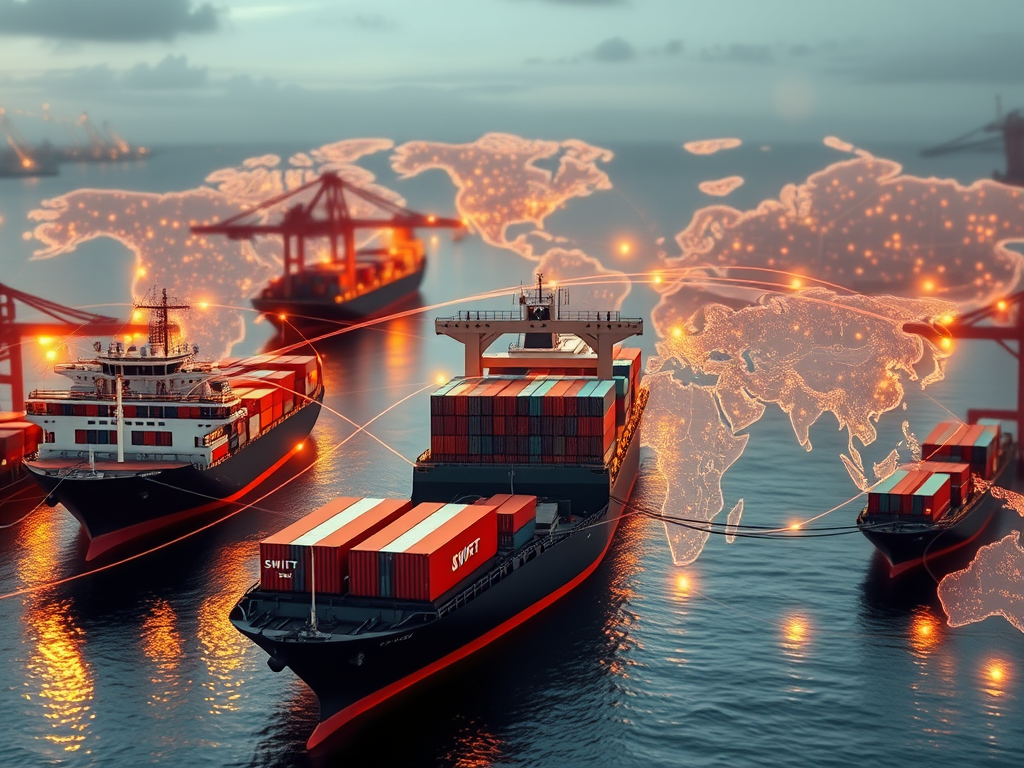
Tariffs dominate current trade discussions. It is easy to overlook the powerful role of Non-Tariff Barriers (NTBs). While tariffs are explicit and quantifiable, NTBs operate below the surface. They often impose higher costs, reduce competitiveness, or even eliminate trade opportunities altogether. These barriers, often disguised as regulatory, financial, or procedural requirements, can be just as—if not more—disruptive than tariffs themselves.
The Invisible Levers of Trade
Governments and regulatory bodies use NTBs for various reasons. These include protecting domestic industries and ensuring consumer safety. They also aim to exert geopolitical influence. Below are some of the most impactful NTBs currently in use:
1. Financial Mechanisms: The Use and Control of Clearing Houses
One of the most effective financial NTBs is the control over global financial clearing houses, such as SWIFT (Society for Worldwide Interbank Financial Telecommunication). Countries and organizations that rely on SWIFT for international transactions can face significant trade disruptions. This happens if access is restricted. Recent sanctions targeting certain nations have demonstrated this issue. Without access to these financial networks, businesses cannot process payments efficiently, making trade nearly impossible. The location of SWIFT in the United States makes it a de facto tool of trade policy for the U.S. government. SWIFT must operate in accordance with domestic regulations. This requirement allows the US government to impose restrictions on trade with a given company or jurisdiction. Consequently, SWIFT would be prevented from acting as a clearing house for this transaction. I have previously explored this, and options to replace SWIFT, in greater detail in my blog post: Are Trade Barriers Good for Business? Part II – Sanctions.
2. International Insurance: Shipping and Trade Finance
Trade depends on reliable insurance, whether for shipping goods or securing trade finance. International insurance policies are often required for businesses to operate across borders. Restrictions or denials of coverage can act as a powerful NTB. Businesses face exorbitant costs if insurers classify certain routes or cargo as “high risk.” Companies may have to abandon trade altogether if insurers refuse to insure shipments to specific countries. The largest shipping insurance companies, such as Lloyd’s of London, Allianz, and American International Group (AIG), have headquarters in major financial hubs like the UK, Germany, and the United States. This positioning means that governments could influence these entities. They might introduce valid concerns, such as geopolitical instability or piracy. This could justify increased shipping costs or selective coverage exclusions. Thus, these actions apply indirect pressure on trade.
3. Domestic Labeling Requirements and Product Standards
Many countries enforce stringent labeling and product standards that act as de facto trade barriers. These measures are often justified for consumer protection. They are also justified for environmental safety or health concerns. However, they can also be used to block foreign competition. For instance, different nutritional labeling requirements in the U.S., Canada, and the EU create compliance challenges for exporters. A recent example of this is the allegation by the U.S. government that Quebec’s requirement for French-language trademarks under Bill 96 constitutes a non-tariff barrier to trade ( Globe&Mail ), restricting market access for foreign businesses that do not comply with the policy.
4. Phytosanitary Requirements: Barriers in Agricultural Trade
Phytosanitary regulations are meant to prevent the spread of pests and diseases but are sometimes used as trade restrictions. For example, certain countries impose highly specific agricultural inspection procedures. These procedures slow down or completely block imports of food products, including but not limited to fresh produce and seafood. Shrimp exporters, for instance, must navigate strict testing for contaminants and disease-free certification, which can be costly and time-consuming. A notable example of phytosanitary measures was the European Union’s restrictions on Indian mangoes in 2014. These restrictions were applied due to pest concerns and were later relaxed. These restrictions were lifted in 2015 following improvements in India’s export control processes and diplomatic negotiations.
5. Other NTBs: Bureaucratic Delays, Import Quotas, and Digital Trade Restrictions
Beyond these specific categories, other NTBs further complicate trade:
- Customs Procedures & Bureaucratic Delays: Lengthy customs clearance times and excessive documentation requirements increase the cost of doing business. For example, Brazil’s complex customs system often results in significant delays, increasing costs for importers.
- Import Quotas and Licensing Requirements: Countries may limit how much of a particular product can be imported. This action artificially restricts supply and drives up prices. China, for instance, imposes strict quotas on foreign films, limiting their distribution in favor of domestic productions.
- Digital Trade Restrictions: Data localization laws and restrictions on cross-border data flows can hinder digital commerce, impacting businesses reliant on cloud services or e-commerce. In contrast, the ASEAN Digital Economy Framework Agreement (DEFA) represents a proactive effort to address these challenges. This initiative goes beyond digitizing trade documents and payment platforms. It aims to harmonize digital trade policies across ASEAN nations. This harmonization facilitates smoother digital transactions and reduces regulatory friction in cross-border commerce.
Moving Forward: Recognizing and Addressing NTBs
Understanding and navigating NTBs is essential for businesses engaged in international trade. While tariffs make headlines, these hidden barriers can have equally profound effects on global commerce.
In the above discussion on NTB’s, some may argue that local procurement laws, plus the application of commercial contracting practices and labour codes also provide significant barriers or incentives to engaging with a market. Addressing these market conditions is a related – but somewhat different – management challenge. One which deserves to be addressed in a separate discussion.
What are your thoughts on NTB’s vs Tariffs? Have you encountered NTBs in your industry? Share your experiences in the comments below—especially how you managed these challenges and adapted your strategies to overcome them.
 PGTS Inc.
Fascinating breakdown of the quiet but potent machinery behind global trade barriers. It’s striking how NTBs function like economic chess moves—subtle, strategic, and often far more disruptive than the blunt instrument of tariffs. The SWIFT example perfectly illustrates how financial infrastructure becomes a proxy for geopolitical leverage. I’d add that in today’s climate, the intersection of digital trade restrictions and data sovereignty laws could well become the most influential NTBs of the next decade. Great read!
LikeLike
Thanks so much!
Nearly 50% of global trade is transacted in USD, and roughly this percentage of international trade is also conducted through the SWIFT network. SWIFT is a member-owned cooperative whose shareholders represent around 3,500 member organisations. Headquartered in La Hulpe, Belgium, the system is overseen by the central banks of the G10 countries, the European Central Bank, and the National Bank of Belgium.
The linkage between the USD and the SWIFT system, in terms of using the relationship to impose sanctions is therefore an interesting one where US domestic regulations have the potential to block transactions which first require the involvement of a US bank, and then secondarily involve SWIFT.
I appreciate the comment as it allows me to pick up the theme you have raised. The combination of SWIFT and the use of USD in trade provide a very effective lever to US policy makers to impose sanctions. But with 10 member states, and with another 10 currencies in use by other member states for conducting trade, there are a number of ways in which other member states can advance (with greater or lesser degrees of success) geoplitical goals through the financial infrastructures in place for trade.
LikeLike
Hello Wilson. Thank you for an insightful read. To add to your list further I’ve also noticed how controlling property, assets ownership, as well as transformational agendas, e.g. BBBEE in South Africa; and knowledge transfer requirements such as effective in India, impose barriers, the cost to overcome which can necessitate compromise beyond the income statement.
Are there frameworks that rank states in this regard? Ease of doing business covers other things but I thought it goes beyond the realm of this specific discussion.
LikeLike
Thanks so much. Its a tricky one. Moving away from the purely qauntitative measures – such as those we saw in the original Ease of Doing Business index – generates a great deal of controversy and opportunities for bias. I have looked for frameworks and would love to open this conversation to a wider audience and see if anyone has seen anything along the lines of what you mention. For the moment, I would still lean to quantifiable measures such as those which had been in the original “DB” index. These often serve as proxies for the more subjective trade barriers which exist within individual jurisdictions.
There has been little on the market to replace the DB indiex since it was discontinued in 2022. I would suggest a few publicly available metrics to begin with, such as:
– Business Registration:
>Time to register a Business
> Use of “one stop shop” or related online tools to register and manage your business with / within the jurisdiction.
> Intagration of regulatory and governance environments between the municipal / provincial / federal jurisdictions.
> Consistency of corporate and payroll tax assessement vs collection.
> Appeal process and average time to appeal tax or related challenges by the business
> History of Nationalisation or State participation / ownership / management within the economy.
– Trade and Commerce
> Size and nature of DFI
> Size and nature of trade in goods and services – intra and inter-regionally
> Tax treatment of trade in goods and services
While the World Bank and IFI have made comments to suggest the need for alternatives to the DB, little has been done and the risk averse culture in multilateral organizations like the World Bank and International Finance Institute would suggest there will be limited appetite for the next generation of managers to address this.
One option would be for regional trade bodies and organziations, such as CARICOM, ASEAN, & ECOWAS to take this on. It would be evident to those reading that this was an exercise in promoting and developing opportunites for the economies of the member states and the region. This desire to promote trade and investment was what undperinned, and perhapas undermined the World Bank efforts in this regard. It was the effort to suggest the DB was anything BUT this which may have caused the downfall of the DB. Perhaps the Regional bodies – in being more transparent in the desire to promote trade and investment – are the best channels for this workk in the future.
I would love to explore this further with yourself, other readers, and potentially one or two of the regional trade with the view of piloting this idea.
LikeLike