For most utilities, the clean energy transition is not a discretionary growth strategy—it is a constrained optimisation problem across system reliability, political accountability, and capital allocation. Unlike private developers focused on individual assets, water and power utilities are responsible for whole systems: generation, transmission, distribution, and uninterrupted service.
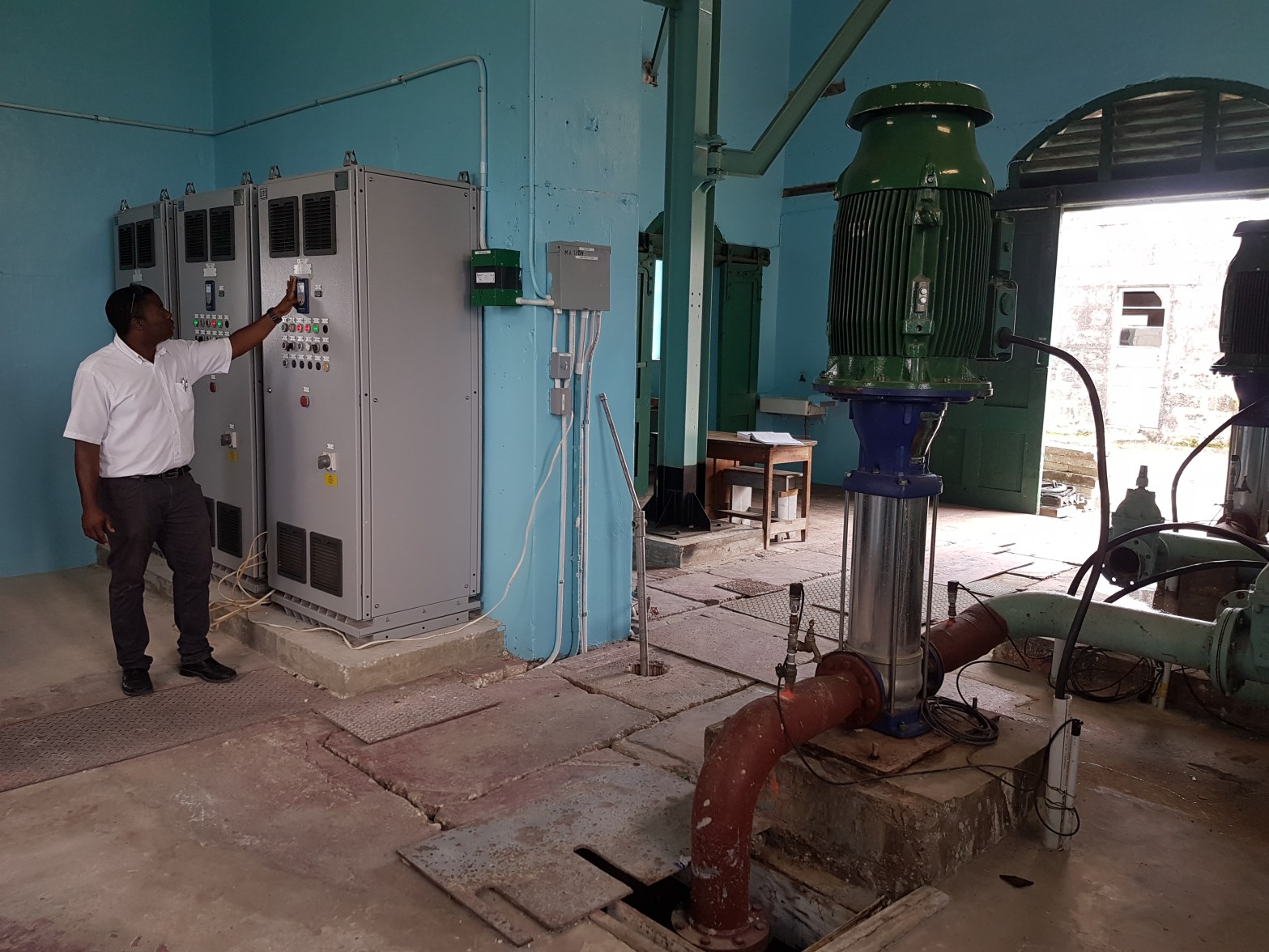
Water and power utilities face a similar constraint: operating costs and service reliability are tightly linked to baseload power availability and price. The case for cleaner grids is clear, but it is easy to miss that water utilities—until the recent rise of large data centres—have historically been among the largest electricity loads in many countries. That makes electricity cost and availability not just an input, but a primary determinant of whether drinking water and wastewater services can be delivered reliably and affordably across municipal and national networks serving residential, industrial, and agricultural users.
Demand is rising through electrification, grids are aging, and energy autonomy is now a national priority in many jurisdictions. Meanwhile, intermittent renewables are being added faster than firm capacity and grid flexibility can absorb them. Regulators and governments are pushing for rapid decarbonization—often without fully pricing in the operational and financial implications. The result is a sector under pressure to move without the latitude to experiment.
This framing matters for clean energy market strategy: it clarifies what utilities will actually buy, how they procure, and where government policy can accelerate outcomes—or inadvertently slow deployment by adding friction in the wrong places.
What Utilities Are Actually Investing In
Headline clean energy investment numbers mask a critical distinction: much of the capital flowing into wind and solar is privately financed and grid-adjacent, sold back to utilities under power purchase agreements. Utility balance sheets, by contrast, are increasingly dominated by baseload and system‑critical investments required to keep grids stable as renewable penetration rises.
I recently conducted an international market analysis for Canadian exporters, which shows several subsectors where utility-led investment is both material and persistent. For global investment excluding North America and China:
- Nuclear (new build, refurbishment, owner’s engineer roles): Typical project sizes range from USD 400–700 million, with roughly 60 large projects globally (excluding China). These projects are politically sensitive, capital intensive, and long-dated—conditions where risk management and institutional credibility dominate procurement decisions.
- Smart grid technologies (power utilities): Projects averaging USD 200–300 million, with more than 200 active or planned projects globally, focused on digital grid management, demand forecasting, and system optimization rather than headline generation capacity.
- Smart technologies (water utilities): Smaller individual projects (USD 7–12 million), but 1,000+ opportunities globally, creating repeatable entry points for Canadian SMEs.
- Utility-scale energy storage (BESS and pumped storage): Utilities are forecast to require 200 GW of new BESS capacity (roughly 2,000 projects) and 40–60 pumped storage projects in the near term, driven by grid stability challenges created by intermittent renewables.
- Geothermal and other firm low-carbon generation: Fewer projects (roughly 50–60 globally), but materially sized (USD 100–200 million) and well aligned with utility needs for dispatchable power.
These are not speculative investments. They are defensive investments in system integrity, increasingly essential as fossil baseload is retired. And because the downside of failure is public, procurement naturally favours proven delivery models, bankable risk allocation, and partners with institutional credibility.
Other Clean Energy Options at a Glance
Beyond the technologies discussed above, three additional pathways merit brief attention. Small-scale, run-of-river hydro projects—many developed by Canadian firms—continue to support remote and smaller communities. However, ESG constraints, permitting challenges, and growing concern over long-term water availability make new utility-scale hydro increasingly unlikely. Waste-to-energy (WTE) is gaining momentum as countries pursue Paris Agreement Nationally Determined Contributions (NDCs), particularly through hybrid facilities and private turnkey power producers selling into the grid under PPAs. Canadian LNG—forecast to reach roughly 100 million tonnes of capacity by 2040 (a $60–70 billion opportunity)—also offers an emissions-reduction pathway through hybrid power generation. However, LNG project structures, where off-takers often pool capital to invest directly in supply and delivery infrastructure, create a distinct energy delivery model that merits deeper analysis beyond this market overview.
How Utilities Buy: Politics, Risk, and Institutional Limits
The dominant buyers in these markets are state-owned or heavily regulated utilities, ministries of energy, and government-mandated project entities. While they operate commercially, their decision-making context differs sharply from private developers.
Several characteristics shape procurement behaviour:
- High political and delivery sensitivity. Grid failures, cost overruns, or missed decarbonization targets quickly become public issues, not internal project lessons.
- Strong discipline around lifecycle cost and reliability. Utilities may accept higher upfront costs for proven performance, but they have little tolerance for technologies that add complexity without system-level benefit.
- Limited capacity for early-stage risk. Many utilities lack the balance sheet strength, governance flexibility, or internal expertise to absorb feasibility risk, multi‑vendor integration risk, or performance uncertainty.
Where procurement can be treated as purely commercial, added process or cost through government intervention is unhelpful. Where projects are system‑critical or politically visible, however, risk transfer and contract certainty become decisive differentiators in terms of assigning both the risk and responsibilities.
The Canadian Clean Tech Supply Base: Capable, Constrained
Canada’s clean tech sector is well aligned with these utility needs—but it is structurally constrained in how it can engage.
Approximately 80–85% of Canadian clean energy firms are SMEs, many with revenues below CAD 10–50 million. As in aerospace, a small number of larger primes anchor global supply chains, while much of the innovation and specialist capability sits with smaller firms. That parallel matters for policy design: Generating $27B annually in exports to over 160 countries, the aerospace sector has long been treated as a strategic, export-oriented sector worth coordinated support—even though its industrial base is also predominantly SME. In 2024 Clean Tech exports from Canada were approximately $20B, with 75% destined for the USA. Canadian Clean Tech plays a system-critical role for fee-bearing utilities, yet it is often positioned as “emerging” and supported with less mature financing and partnering models. In many ways, this resembles where aerospace may have been a generation ago: strong capability, but still building the institutional track record, balance-sheet strength, and program architecture that enable large-scale delivery.
Individually, most Canadian firms in the clean tech sector diversifying beyond the USA cannot:
- Fund large feasibility or system studies
- Carry sovereign or utility counterparty risk
- Provide performance security acceptable to state-owned buyers
This is not a competitiveness problem—it is a structural mismatch between where capabilities to support exports reside and how large, public utilities procure.
Where Government Support Actually Changes Outcomes
Given these realities, the question is not whether governments should support clean tech exports, but where intervention materially shifts utility behaviour and project outcomes.
Experience points to several high‑leverage roles.
Where policy helps—and where it gets in the way
- Helps: de-risking early-stage studies; providing credible risk-sharing (e.g., guarantees) for system-critical infrastructure; and funding grid-enabling capabilities (digital, storage, interconnection) that reduce whole-system costs.
- Gets in the way: adding procurement complexity to low-risk work; creating fragmented programs that force SMEs to chase many small, misaligned processes; and policy that rewards “new generation” headlines while under-investing in the unglamorous work of grid modernisation and firm capacity.
- Design principle: align incentives to system performance (reliability, total cost, emissions intensity) rather than to technology labels—so utilities can choose the mix that actually keeps the lights (and water) on.
1. Feasibility and Early Project Development
Utilities frequently struggle to fund or justify early-stage studies, despite these being prerequisites for large downstream investments. When Canadian firms cannot participate at this stage, they often lose both relationship positioning and future delivery scope.
Targeted public support—directly or through partners—can unlock projects that later scale into USD 100M+ implementations.
2. Risk Mitigation for System-Critical Projects
For politically sensitive or nationally strategic infrastructure, sovereign-backed contracting, guarantees, or structured risk-sharing can materially improve bankability and buyer confidence. These tools matter far more here than in crowded, privately financed markets.
3. Proportionate, Streamlined Engagement Models
Overly heavy procurement and government contracting models routinely fail for advisory, owner’s engineer, or early digital deployments. More agile approaches for lower-value, lower-risk work significantly improve conversion while preserving credibility.
4. Disciplined Market Focus
Public resources are most effective when concentrated on utility-led, baseload-oriented investments where Canadian capabilities and government tools align—rather than on segments already well served by private capital.
Conclusion: Lessons and Implications for Policy and Procurement
Lesson: In regulated, system-critical sectors, transition is delivered through risk management and reliability, not aspiration. Buyers optimise for system performance under political and capital constraints—so solutions win when they reduce uncertainty, integration burden, and lifecycle risk.
Implications for government policy: focus support where it changes buyer behaviour—early-stage de-risking, system-critical risk-sharing, and proportionate engagement models that let utilities test and scale without process overload. Avoid policies that increase transaction cost for low-risk work or that over-index on technology categories instead of measurable system outcomes.
Bottom line: The opportunity is not to outspend larger economies. It is to intervene precisely—using credibility, risk-sharing, and targeted capital to unlock disproportionately large system and export outcomes. This same playbook applies anywhere governments want faster delivery in complex public systems: align incentives to outcomes, reduce early-stage uncertainty, and make it easier to buy what works.

